
Billion Dollar Biotech Company — In Hawaii? (TIGR Newsletter)

Hi, Biotech is an independent publication with no affiliation with Hawaii Biotech, Inc. This page preserves a historical record from the company's original press archive, republished for research and archival purposes. Copyright in the original material remains with its original owner.
Billion dollar biotech company -in Hawaii? Is that possible? Yes, it is. A long shot, but not an impossible long shot. The company with the chance is Aiea-based Hawaii Biotech Inc. (www.hibiotech.com). It currently has several promising, large-market, proprietary products, at least one now shown to work in relevant animal models - the "proof of concept" point in development cycle that spurs serious venture capital investor interest. Most promising horse in race for HBI is CardaxTM designed to reduce the amount of tissue damage from inflammation that occurs in typical heart attack (paradoxically, when blood supply restored after blockage by blood clot). Three other ponies with legit chance to place or show include vaccines for West Nile fever and dengue fever; and promising anthrax anti-toxin. Nine additional products in various stages of development as well, including vaccines for Hepatitis C, malaria, dreaded ebola (think of Dustin Hoffman in 1995 film Outbreak); early but promising potential treatment for systemic fungal infections (often hit lungs, kidney, liver of elderly or immune-compromised people). Even evaluating a SARS program……. Primary credit for commercialization push goes to President/CEO David Watumull, hired in Feb. 2001 by company board, including cofounder and former chairman Tom Humphreys. Since coming on board, Watumull has raised $4.4 MM interestingly enough, almost exclusively (90%) from local investors to pay product development costs; hire additional top scientists with track record of taking drugs through long and winding FDA approval process (Mark Goldman, anthrax team leader and drug discovery expert from Merck where he helped shepherd AIDS drug Susteeva to market, joined Fall 2001; Carolyn Weeks-Levy formerly headed up vaccines research at Lederle; Julia Leung, head of dengue project, was involved in development of FDA-approved PSA detection kit for www.tigrnet.org TARGETED INDUSTRIES GROWTH REPORT CITY BANK & HAWAII BUSINESS EDITOR: MichaelSchmicker PUBLISHER: Richard Lim., President and Chief Operating Officer, City Bank Ronald Migita, President and CEO, CB Bancshares; Vice- Chairman and CEO, City Bank 09.2003 This Hawaii Business newsletter is sponsored in the public interest by City Bank and is designed to awaken, generate and sustain significant, broad-based private and public sector support for selected emerging growth industries in Hawaii which offer one or more of the following advantages: a) a competitive niche for Hawaii in the global economy, b) rapid upside growth potential c) the ability to replace imports or generate export dollars, and d) the promise of attractive job and career opportunities for Hawaii's people. UH R & D • BIOTECHNOLOGY • OCEAN SCIENCE AND TECHNOLOGY • ASTRONOMY • INTERNET AND COM- PUTER SOFTWARE SERVICES • SPORTS TOURISM • FILM PRODUCTION • HEALTH TOURISM & SERVICES EXPORTS • DIVERSIFIED AGRICULTURE • AQUACULTURE • FORESTRY • EDUCATION TOURISM HAWAII BIOTECH INC. BETTING ON FOUR HORSES FOR BILLION DOLLAR PAYOFF David Watumull: Cardax could be billion dollar payoff
prostate cancer). Has also strengthened cooperative research ties to national medical research powerhouses like Cleveland Clinic (cardiovascular disease); Walter Reed Army Institute of Research (dengue fever); University of Texas-Galveston (West Nile disease). In short, creating very model of a modern, major Mainland biotech company…….HBI operated for almost 20 years financed primarily by $30 MM in federal and state research grants. Effort produced some clinical drug candidates, like dengue fever vaccine, but company needed additional talent, products with bigger upside, more money to get anything ready for commercial market. Watumull found enough angel money to finance entry fee for race. "Our current Series A Preferred financing was basically angel in character. Our next major milestone for the company is to attract VC financing. The first real institutional money will be our proposed Series B round, which is 6-12 months away. And the real driver, according to all the VCs I have talked to, is going to be our next animal studies with Cardax. That is the most likely trigger for VC financing." Drugs go through laborious process to FDA approval - tests start in vitro (test tube) where beneficial properties are first catalogued; testing on animals follows ; then finally three-phase clinical trials on humans - first to establish safety and dosage; second to prove preliminary efficacy in small group of humans (second major "value creation event" in eyes of potential investors after earlier "proof of concept" in animals); third and last to confirm efficacy through large-scale, expensive human testing. Watumull brought Cardax product idea to his new company. After leaving Aquasearch, Watumull played with promising class of compounds that had broad anti-inflammatory effects (not just heart) but most importantly also had very benign safety profile. "This is how you differentiate yourself in the competitive anti-inflammatory marketplace. There are lots of anti-inflammatories on the market, like aspirin, steroids, etc., but all of them have significant side effects. Most you can't take for an extended period of time, but heart inflammation requires treatment on a continual basis for the rest of your life basically. So I thought this was an interesting class of compounds, and actually formed a company around it called ROS Pharmaceuticals to try and commercialize it. But then HBI came calling and I figured I could fold it into their company as a logical addition to the HBI pipeline of products." Could have targeted rheumatoid arthritis, eczema but heart attacks offered bigger, more profitable application. "It is a huge market. Plus, a reasonable Phase II clinical trial is possible. Design a Phase II trial that can show in a scientific, statistically significant way that your drug is working and you create enormous value at that point. We hope we can do this with only 200-300 people or so, which would only cost several million dollars. That's a cost a small biotech company like ours can afford. So the way is clear for Cardax. We've already done one successful proof of concept study in rats, and we're doing another one on larger animals soon. We still have to do pharmacokinetics studies - looking at how the drug acts in the bloodstream over time in animals - and manufacture our compound according to FDA standards prior to starting clinical trials on humans, but we've made substantial progress. Cardax has the potential to be both a curative as well as preventative drug. It can be used with somebody at risk of a heart attack, or it can be used to reduce the damage after you have a heart attack. If the heart attack isn't severe enough to kill you on the spot, you end up in an emergency room where they remove the blood clot that caused it. But downstream of the clot, a massive, inflammatory response occurs, and that inflammation is what Cardax is designed to reduce or eliminate. In proof of concept animal studies, we have already demonstrated that Cardax can reduce the size of the permanently damaged tissue by up to 60 percent. So Cardax is clearly the ‘value creator' for HBI right now."…...HBI's anthrax anti-toxin can't match dollar potential of Cardax, but has its own promising profit possibilities. "We can cre- TARGETED INDUSTRIES GROWTH REPORT Amy Yamamoto: immunosensor for bacterial food pathogens
TARGETED INDUSTRIES GROWTH REPORT ate with anthrax alone the kind of financial value that would make every investor in Hawaii Biotech extremely happy." Anthrax bacteria attack via letter mailed to U.S. Senate in October 2001 followed by similar letters to CBS, NBC TV news stations, NYC City Hall, elsewhere shut down Congress, frightened nation, created run on antibiotic CiproTM. Anthrax one of dozen biological weapons terrorists around globe are playing with. For several years before, HBI worked on related bioterrorism target, botulinum (another possible terrorist toxin that's 65% fatal without antibiotics treatment). When anthrax threat arose, HBI quickly leveraged previous work into $300K anthrax grant from National Institute of Allergy and Infectious Diseases. HBI shortly discovered - by pure serendipity - whole class of promising existing compounds that worked vs. anthrax in vitro. Nice timing. DOD gave HBI additional $2.2 MM in FY 03 (part of Tripler Hospital funding) to test HBI's anthrax antitoxin compounds further; Sen. Inouye supporting follow-on funds for FY 04. Next step is to test it in animals at National Institutes of Health. NIH has accepted animal model, rat, they can challenge with anthrax, see if compound inhibits morbidity/mortality rate. Should have results in next 3-6 months. If it works, HBI will then apply medicinal chemistry to reduce or possibly eliminate existing, small 5% toxicity of compound (obviously, people facing almost 100% death rate form anthrax infection would welcome product risk as is, but drug appeal would increase with less). Chemistry optimization also produces novel, patentable compound for HBI (natural or known compounds do not). At that point, HBI would have second major "value creation event" (Cardax the other), making 2003 potential breakout year. HBI's anthrax antitoxin has competitive market advantage over antibiotic like Cipro which doesn't work unless taken within few hours of infection, before symptoms appear. Unfortunately, once attack occurs, and you notice symptoms, it's often too late. HBI's antitoxin better because can take it after symptoms appear, removes toxin. Also, HBI antitoxin is pill. Only real HBI competitor on horizon delivers antitoxin by needle. Easy choice. Needles risky to keep around; medicine stored in glass needle less stable; most people hate giving self injections. Anthrax antitoxin development program attractive to HBI for another reason: less costly to take to market than many other drugs. "It's likely you won't have to do an expensive Phase III clinical trial. Ethically, you can't actually inject people with anthrax to test the antitoxin on humans, and not enough people get anthrax naturally to provide a test population. So most likely the FDA will only require a Phase I safety trial and a Phase II looking at pharmacokinetics only, to establish dosage. So the route to market is quicker and cheaper. Also, we can probably get government money to take it through Phase I and II, so investors love that." Only drawback in terms of ROI is the basically one-time market at end. Uncle Sam and governments around world might buy, stockpile lots of pills, but doubtful if they will need many refills. Not like Cardax which you use and buy again and again for life. Still, could be contract worth several hundred million dollars. "If we succeed with anthrax, it would be a major coup for HBI. No question. It would take the company to a different level." ……. Last two of HBI's four major horses currently Axel Lehrer: protein purification for malaria vaccine Geoff Nadolski: analogs of natural antioxidant for Cardax project
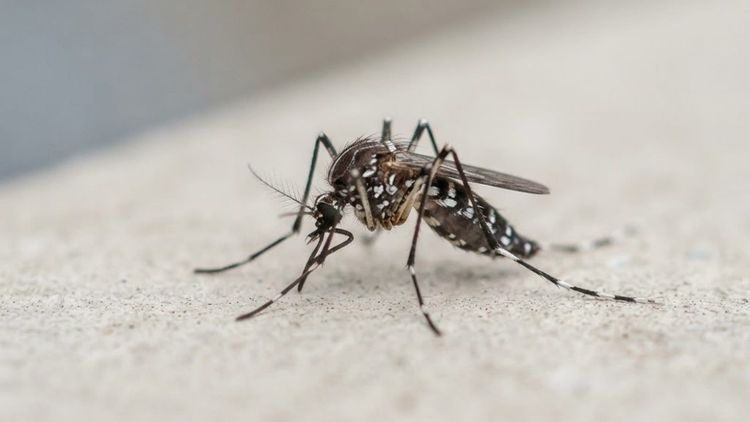
THE $2.7BILLION TIGR I UH R&D •$142 million Total UH research grants received FY 01-02. I Ocean Science and Technology •$133 million For 2001. DBEDT study. 1,540 employees (FTE) I Biotechnology •$320 million 1999 est., (operating budgets). Job count: 1,700 F/PT employees. I Astronomy •$145 million FY 2001 statewide direct operating expenditures. Job count 2001: 796 workers. Source UHIFA. I Internet, Computer and Software services •$600 million For 1998, HTDC survey estimate. Job count 1998: 7,538 workers. I Film and Television •$146 million Direct expenditures, 2002. Est. job count, 1999: 4,190 workers. Source: study by Film Offices of the Hawaiian Islands. I Diversified Agriculture • $357 million Farm value 2000. State Dept. of Ag. Job count 2000: 5,600 workers. Figure does not include sugar and pineapple crop value. I Aquaculture •$34 million 2001, State Dept. of Agriculture: commercial production, research, tech transfer. Job count: 850 workers. I Educational Tourism •$181 million DBEDT estimate, 1997, Hawaii public and private colleges and universities, vocational/technical schools. 12,250 out-of-state students. (excluding vocational, technical). in race, West Nile and dengue vaccines, could also take HBI to the big time. Significant minority of potential VC investors tracking HBI - two out of ten - like vaccines' promise. But path to commercialization for dengue clearly more expensive, time-consuming, payoff smaller, than Cardax. HBI dengue vaccine made of proteins, requires seven different proteins manufactured according to strictly defined FDA practices, could cost $4MM-$5MM to produce material for clinical trials; dengue has no well-accepted model in animals. In end, dengue development could add 3-5 years and $20 MM-$40 MM to cost compared to Cardax. Dengue vaccine also primarily a Third World (less profitable) market product; number of affected persons huge but dollars not (must sell at low price, very skinny margins); lots of potential liability, like all vaccines. Bottom line? Profit potential still there, but not scenario most VC investors attracted to.….. West Nile virus vaccine better bet than dengue. Mosquito bite-delivered West Nile can kill; U.S. market is big (most states already reporting cases); well-accepted animal model available for tests (if your drug prevents it in hamsters, should work in humans, so early stage, animal proof-of-concept test is major value creation event); no practical way for FDA to require expensive Phase III clinical trials - can't challenge people with real West Nile virus, and no way to know where West Nile will break out in huge numbers, so can't vaccinate 20,000 people in advance (further, new FDA rules have been loosened to allow bioterrorism agents, including West Nile, to bypass Phase III). Biggest HBI advantage vs. competitors? HBI protein-based vaccine is recombinant subunit (non-living portion of virus) while other vaccines are actual live (albeit attenuated) viruses with the possibility of causing the underlying disease. HBI's vaccine cannot. All things being equal, if you had to take a vaccine dose, which would you choose? If you're an investor looking for minimum product liability, which would you back with bucks? Breakthrough, value-creating "proof of concept" study results for West Nile came in last month -- vaccine delivered 100% protection vs. death rate of 77% for control animals……HBI currently sustained by government grants, Series A angel dollars, one product already on market generating several hundred thousand dollars a year - dengue fever diagnostic detection kit (State of Hawaii used kits in recent dengue outbreak on Maui). But its four horses are moving towards starting gate. "If we were to get lucky and have more than one of these four products work out, you would be looking at a multi-billion dollar market cap company with several thousand employees. In fact, a successful Cardax alone would create that." Meanwhile, Watumull already thinking 5-8 years out, working closely with visionary UH med school dean Ed Cadman (on HBI board) to get modern biotech park going in Kakaako. UH could provide HBI pipeline to new discoveries; HBI provide UH with convenient, efficient way to commercialize them. If all works out, one heck of an anchor combo for infant Hawaii biotech industry. Cheer them on. More Information: Hawaii Biotech Inc., 808-486-5333 make contact Correspondence: Marissa Matsuda Sandblom Corporate Communications Officer City Bank 201 Merchant Street, 12th Floor Honolulu, HI 96813 Phone: 808-535-2586 Fax: 808-535-2524 tigrnet@hawaii.rr.com

Member discussion