
Briefing #002: a cancer vaccine passes its phase 3

Tuesday morning. Three things worth knowing, and one from the attic.
The lead: a personalised cancer vaccine passes its biggest test
Merck and Moderna reported positive topline results from INTerpath-001, the phase 3 trial of intismeran autogene (V940, formerly mRNA-4157) given with pembrolizumab to people whose high-risk melanoma had been surgically removed. The primary endpoint, recurrence-free survival, was met. It is the first phase 3 win for a personalised mRNA cancer vaccine, and it arrived roughly five years after the technology was pulled into the mainstream by a different disease.
How big the benefit is matters as much as the fact of it. Earlier phase 2b data put the reduction in recurrence or death at roughly 42% at around two years, and the five-year analysis was reported at about 49%. The phase 3 numbers will be presented at a conference rather than buried in a press release, and that is where to look for the confidence intervals.
The interesting problem is no longer biology. Each dose is manufactured for one person, from sequencing their tumour to identifying neoantigens to producing and releasing a batch. That is weeks of turnaround, a supply chain that has never run at scale, and a price that nobody has published. A vaccine that works but cannot be made fast enough for a patient with stage III melanoma is a logistics failure dressed as a scientific one. Watch the manufacturing partnership announcements over the next two quarters rather than the efficacy headlines.
Shorts
Bristol Myers Squibb puts $237m behind AI-run trials. Pathos AI closed a Series E at a reported post-money valuation of about $3 billion, led by BMS, with existing investors alongside. The money goes to Foundry, its clinical development platform, and to an oncology pipeline. The same day, Pathos announced collaborations with BMS and Tempus touching Alzheimer's and neurology. Read it as pharma buying trial infrastructure rather than AI-designed molecules: the value on offer is fewer failed trials and faster enrolment, which is where the industry actually bleeds money.
The HPV dose question gets another data point. An analysis out of West Virginia University associates two or three HPV doses with lower cervical cancer incidence than a single dose. That lands in a live argument: single-dose schedules are what make vaccination campaigns affordable in the countries carrying most of the cervical cancer burden, and every study that favours multi-dose schedules complicates that calculation. It does not settle it either. Observational dose comparisons carry real confounding, and the trials that could settle it are slow and expensive by nature.
From the attic
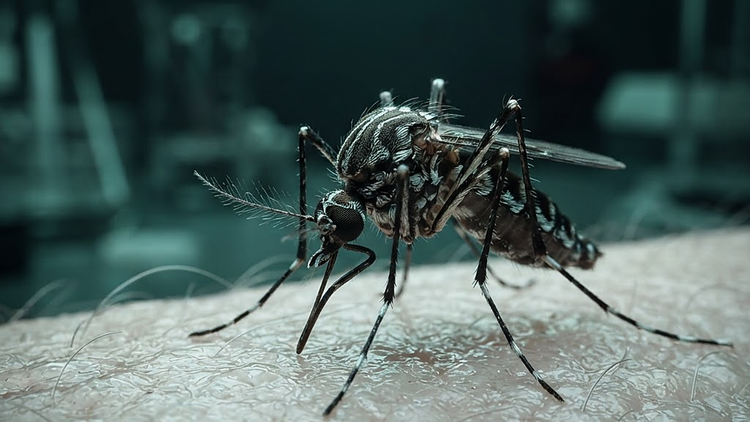
Ten years ago this archive carried a grant award for chikungunya work, filed under the assumption that arboviruses were a niche concern for tropical medicine. That assumption has not aged well. Dengue, chikungunya, West Nile and now repeated warnings about Japanese encephalitis all sit on the same map, and the vaccine pipeline is still chasing them one at a time. The 2016 note is worth reading for how modest the ambition was.
Briefing #002. One email, every Tuesday, on what the science is being funded to do. Reply to this address if something here is wrong; corrections get published.
Member discussion